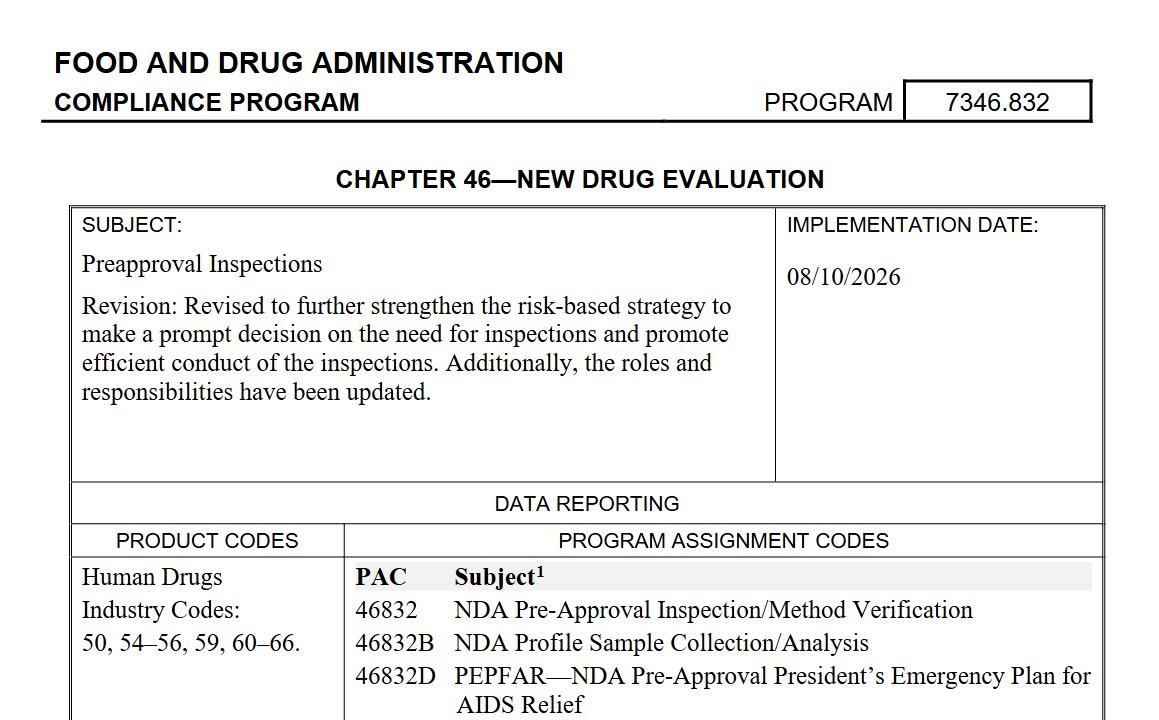
根据新版指南,当上市申请提交后,CDER组建的整合质量评估(IQA)团队将采取“全面且基于风险”(holistic and a risk-based approach)的审评方法,其首要任务是对申请文件中所有列明设施的检查必要性进行“累积风险评估”(cumulative risk assessment),并将该评估细化为对产品风险、生产工艺风险、设施合规风险以及申报资料真实性风险的交叉审查。
QA: Ensure all sterile drug processes are audited against the guidelines.
Production: Follow CGMP regulations strictly during manufacturing operations.
Regulatory Affairs: Stay updated on regulatory changes and ensure compliance in submissions.
Compliance: Monitor and report any deviations from the guidelines.
Scope of the Document: This document applies to the manufacturing and testing of sterile drug products, including terminally sterilized and aseptically processed drugs. It is relevant to chemical drugs and biological therapeutic drug products, excluding CBER-regulated products and veterinary drugs. It is applicable to both domestic and foreign inspections and is issued by the FDA for Biotech, large pharmaceutical companies, and multinational corporations.
Key Points Summary:
Inspection Types and Reporting: Full and Abbreviated Inspections are detailed, with specific reporting requirements for Establishment Inspection Reports (EIRs) using TurboEIR or equivalent systems.
Compliance with CGMP: The document emphasizes compliance with 21 CFR Part 210 and 211, stating that manufacturers following the 2004 Aseptic Processing Guidance are generally considered compliant.
Inspection Planning and Strategy: The strategy includes a system-based approach focusing on areas presenting the greatest risk of contamination, with specific instructions for team composition and the use of microbiological expertise.
System Inspection Coverage: Detailed guidance is provided for inspecting each of the six systems, with emphasis on the Quality System, Facilities & Equipment, and Production Systems due to their critical role in sterility assurance.
Regulatory/Administrative Strategy: The document outlines the process for recommending regulatory action when a firm is not in a state of control, considering the seriousness of deviations and the potential impact on product quality.
Note: The above summary captures key aspects of the document, but for comprehensive understanding and application, the full text should be reviewed.
要点总结: FDA CPGM 7356.002F文件强调了对API制造设施的CGMP检查,以确保API符合联邦食品药品化妆品法案的要求。文件整合了ICH Q9(R1)、Q10和Q12指南,强调了质量风险管理、药物质量体系和产品生命周期管理的重要性。检查程序涵盖了API生产和分销的所有方面,包括材料接收、生产、包装、质量控制、放行、合同测试、存储和分销。特别指出,API制造商应从起始物料开始应用CGMP,并验证影响最终API质量和纯度的关键工艺步骤。文件还详细描述了检查操作、报告要求和监管策略,包括对OAI(官方行动指示)检查的分类和处理。强调了数据完整性、API合规性以及与注册承诺的一致性。